
The Final Flight & Mystery of Disappearance
- Mystery That Endures
Taipei Air Crash Report (1945)
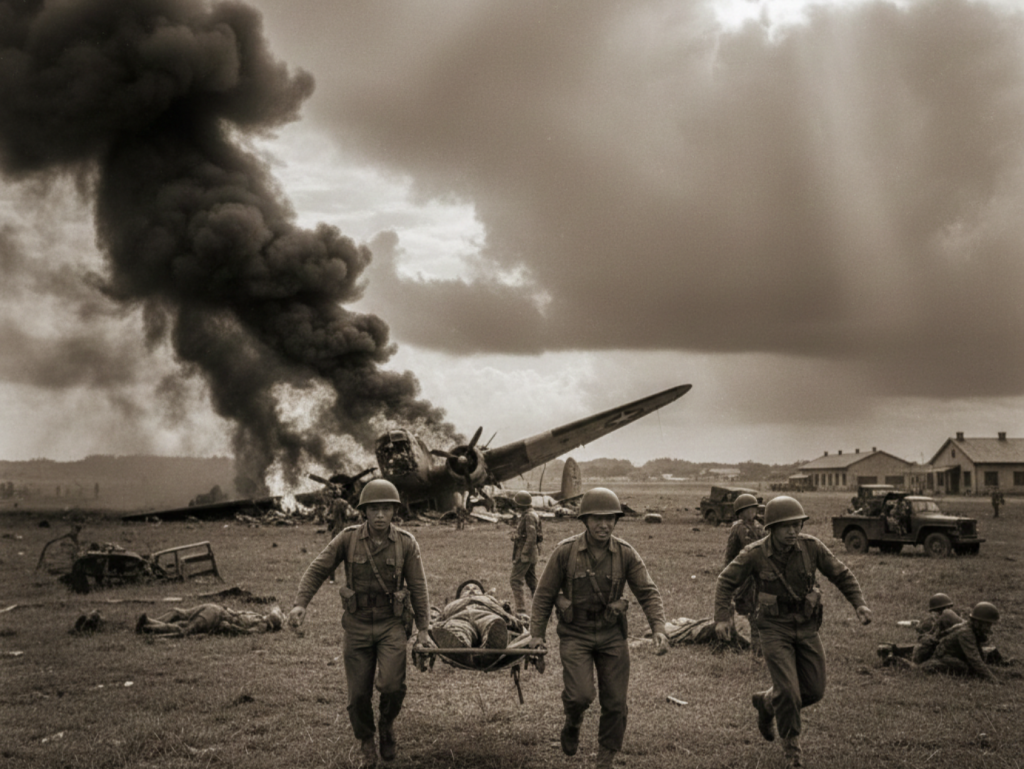
On 18 August 1945, a tragic incident was reported from Taipei (then under Japanese control), stating that the aircraft carrying Netaji Subhas Chandra Bose crashed shortly after takeoff. The official reports claimed that the plane’s engine caught fire, leading to a devastating explosion that resulted in severe injuries to the passengers. According to Japanese medical staff, Netaji suffered extensive burns and was declared dead a few hours later in a military hospital. The news shocked the world and threw the Indian independence movement into deep grief.
Shah Nawaz Committee (1956)
Formed by the Government of India to investigate the alleged death of Netaji. The committee concluded that Netaji died in the Taipei plane crash, based on testimonies from Japanese officials and survivors. However, two members dissented, stating the evidence was inconclusive.
Khosla Commission (1970–1974)
Led by Justice G.D. Khosla, this commission reviewed witnesses and documents from multiple countries. It also upheld the crash theory but faced criticism for overlooking contradictory evidence and public testimonies suggesting Netaji survived.
Mukherjee Commission (1999–2005)
The most extensive inquiry, led by Justice M.K. Mukherjee. After international investigation, it rejected the plane crash story, stating there was no proof of Netaji’s death in Taipei. The Indian government did not accept the report’s findings.
- Sacred Unresolved Legacy
Ashes at Renkoji Temple (Japan)
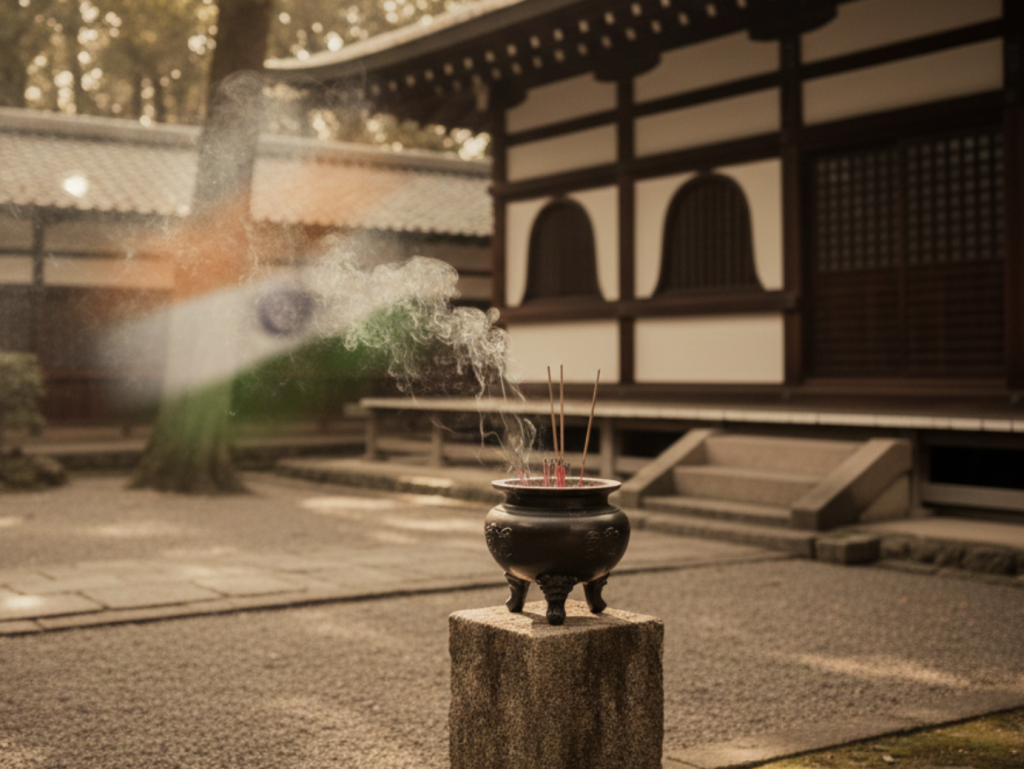
The remains believed to be of Netaji Subhas Chandra Bose have been preserved at the Renkoji Temple in Tokyo, Japan, since 1945. According to Japanese records, Netaji’s ashes were handed to the temple by the Japanese government after the reported air crash in Taipei. For decades, dignitaries, INA veterans, and Indian leaders—including Prime Ministers and family members—have visited the temple to pay homage. Despite this, controversy persists over whether the ashes truly belong to Netaji, as no conclusive DNA testing has ever been conducted.
The Indian government and Netaji’s family remain divided on the issue. Some argue that bringing the ashes to India would honor a national hero, while others insist that doing so would validate an unproven death theory. The ashes at Renkoji Temple continue to symbolize both reverence and unanswered questions, forming a profound emotional chapter in India’s freedom story.
- First Official Inquiry
Shah Nawaz Committee (1956)
The Shah Nawaz Committee, formed in 1956 by the Government of India, was the first official investigation into the alleged death of Netaji Subhas Chandra Bose. Chaired by Shah Nawaz Khan, a former INA officer, the committee examined testimonies from Japanese officials, eyewitnesses, and available documents regarding the reported Taipei air crash of 1945.
The committee concluded that Netaji had indeed died in the crash, citing evidence from Japanese medical reports and local witnesses. However, two committee members dissented, arguing that the investigation was limited and many documents were either missing or inaccessible. The findings sparked debate across India, with INA veterans and Netaji’s family questioning the veracity of the evidence.
Despite its official status, the Shah Nawaz Committee could not provide definitive proof, leaving lingering doubts about the circumstances of Netaji’s death. Nevertheless, it laid the foundation for future inquiries into one of India’s most enduring historical mysteries.
- Second Official Inquiry
Khosla Commission (1970)
The Khosla Commission, led by Justice G.D. Khosla, was appointed by the Government of India in 1970 to re-examine the circumstances surrounding Netaji Subhas Chandra Bose’s alleged death. This commission aimed to evaluate earlier findings, including those of the Shah Nawaz Committee, by reviewing available documents, eyewitness accounts, and Japanese records.
After extensive investigations, the commission upheld the conclusion that Netaji had died in the Taipei air crash of 1945, citing Japanese official reports and hospital records. However, the commission faced criticism for ignoring conflicting testimonies and certain classified documents, leading many to question its objectivity. INA veterans and historians continued to express doubts about the conclusions.
Despite the official declaration, the Khosla Commission could not resolve all ambiguities, leaving unresolved questions about Netaji’s fate. Its findings, though significant, only deepened public curiosity and debate regarding the mysterious final years of one of India’s greatest freedom fighters.
- Final Official Inquiry
Mukherjee Commission (2005)
The Mukherjee Commission, officially appointed in 1999 and chaired by Justice M.K. Mukherjee, was the most comprehensive investigation into the fate of Netaji Subhas Chandra Bose. Tasked with examining all available evidence, the commission reviewed Japanese records, eyewitness testimonies, intelligence reports, and archival documents from India and abroad.
After years of detailed inquiry, the commission concluded that there was no conclusive evidence that Netaji had died in the Taipei air crash of 1945. It highlighted inconsistencies in earlier reports and raised serious doubts about the authenticity of Japanese testimonies and hospital records. The commission recommended further international research, but its findings were not accepted by the Government of India, leaving the official stance unchanged.
Despite its controversial outcome, the Mukherjee Commission reignited public interest in Netaji’s mysterious final years, fueling debates, research, and speculation that continue to this day. It remains the most exhaustive inquiry into one of India’s enduring historical enigmas.
- Critical Evidence Collection
Subroto Mitra Evidence Files
Japanese Military Dispatches
Official wartime communications detailing Bose’s movements, INA operations, and coordination with Axis powers.
Eyewitness Testimonies
First-hand accounts from INA soldiers and local witnesses recounting Netaji’s activities during WWII.
Personal Correspondence
Letters written by Netaji and associates revealing strategic plans, personal thoughts, and patriotic intent.
Intelligence Reports
Secret reports analyzed by Mitra, highlighting contradictions and hidden insights about Netaji’s final years.
- Mystery Explored Deeply
Popular Theories & Investigations
Taipei Air Crash Theory
The official account claims Netaji died in a plane crash in Taipei on 18 August 1945.
Japanese reports, eyewitness testimonies, and hospital records suggested that Netaji was severely injured in the crash and later died in a nearby military hospital. Many INA veterans and researchers, however, questioned the authenticity of these reports, citing missing documents and conflicting accounts.
Survival in Japan Theory
Some believe Netaji survived and lived secretly in Japan.
According to certain testimonies and letters, Netaji might have been sheltered in Japan under a different identity after the war. This theory suggests he continued covertly influencing global politics while keeping a low profile, though no conclusive evidence has been found.
Soviet Exile Theory
Netaji allegedly escaped to the Soviet Union post-1945.
Several documents and intelligence reports hint that Netaji might have crossed into Soviet territory to evade British surveillance. Researchers argue that he sought support for India’s independence from the USSR, but the theory remains unproven due to lack of definitive proof.
Disguise in India Theory
Claims that Netaji returned to India in disguise.
Some oral histories and local accounts suggest that Netaji might have returned to India incognito to continue organizing freedom activities. Proponents argue that he lived under assumed identities, but these claims are highly debated and remain speculative.
Ongoing Investigations & Evidence Files
Documents and research continue to fuel debate.
Investigators like Subroto Mitra collected letters, Japanese records, and eyewitness accounts. Multiple commissions—including Shah Nawaz, Khosla, and Mukherjee—have studied these materials. Despite decades of research, no inquiry has conclusively proven Netaji’s fate, keeping the mystery alive.