Rise in National Movement
Role in Indian National Congress
Leadership Role as Congress General Secretary
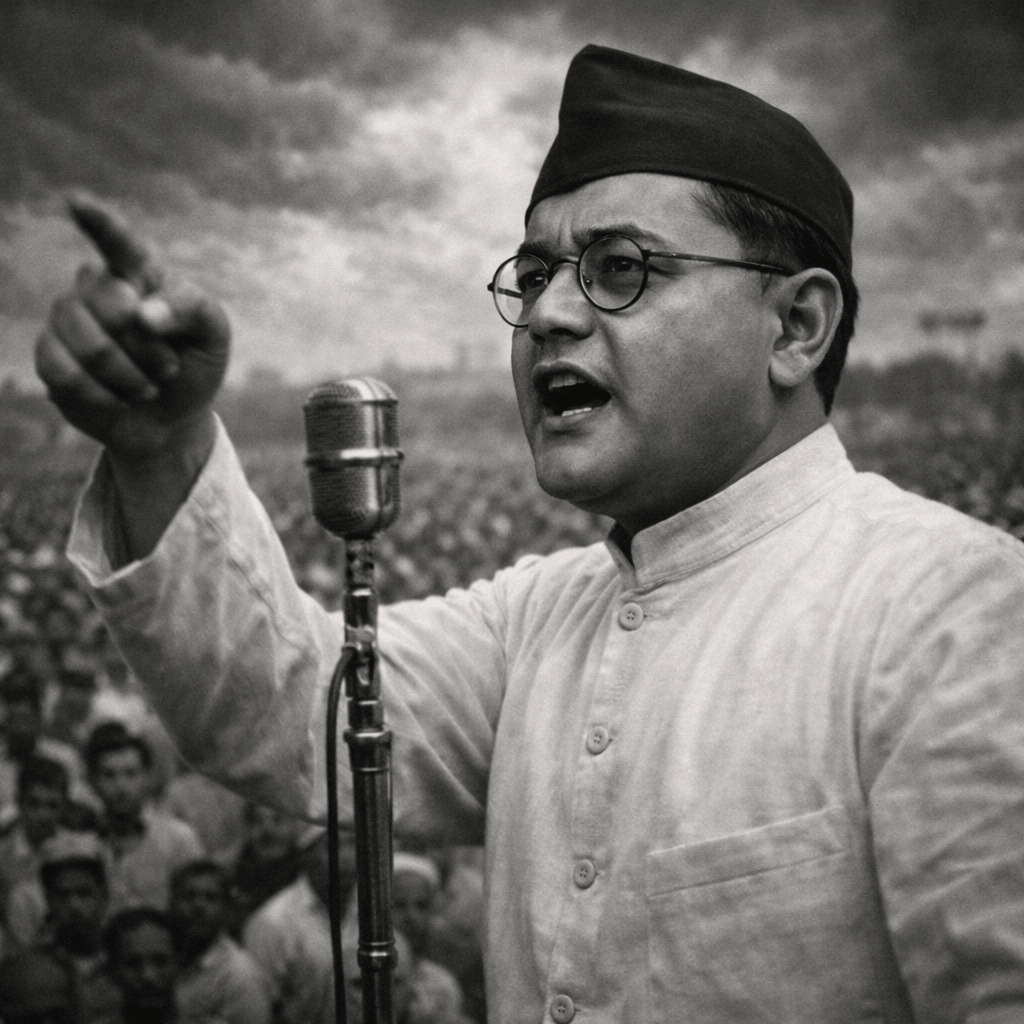
Subhas Chandra Bose served as General Secretary of the Indian National Congress during a crucial phase of India’s freedom struggle. In this position, he demonstrated exceptional organizational ability and administrative efficiency. Bose worked tirelessly to strengthen the party’s structure, improve coordination among provincial committees, and energize grassroots workers. He believed that the Congress must transform from a debating platform into a disciplined mass movement capable of confronting British authority. His leadership style combined intellectual clarity with action-oriented planning, inspiring young leaders and volunteers to adopt a more assertive approach toward achieving complete independence.
As General Secretary, Bose emphasized national unity, economic planning, and social reform as integral components of the independence movement. He supported constructive programs but also advocated stronger resistance against colonial policies. His tenure reflected his belief that freedom required bold strategy and unwavering determination. Bose’s efforts helped modernize the Congress’s functioning, introducing systematic planning and mobilization techniques. Though differences later emerged between him and the moderate leadership, his contributions as General Secretary significantly strengthened the organizational backbone of the national movement and prepared the groundwork for more dynamic political action.
Collaboration with Jawaharlal Nehru in Congress
Subhas Chandra Bose and Jawaharlal Nehru shared a dynamic partnership within the Indian National Congress during the 1920s and 1930s. Both leaders represented the younger, progressive generation of nationalists who demanded complete independence rather than dominion status. Their speeches reflected modern, forward-looking ideas rooted in socialism, industrial development, and strong central governance. Together, they energized students and youth movements across India with their bold vision for freedom.
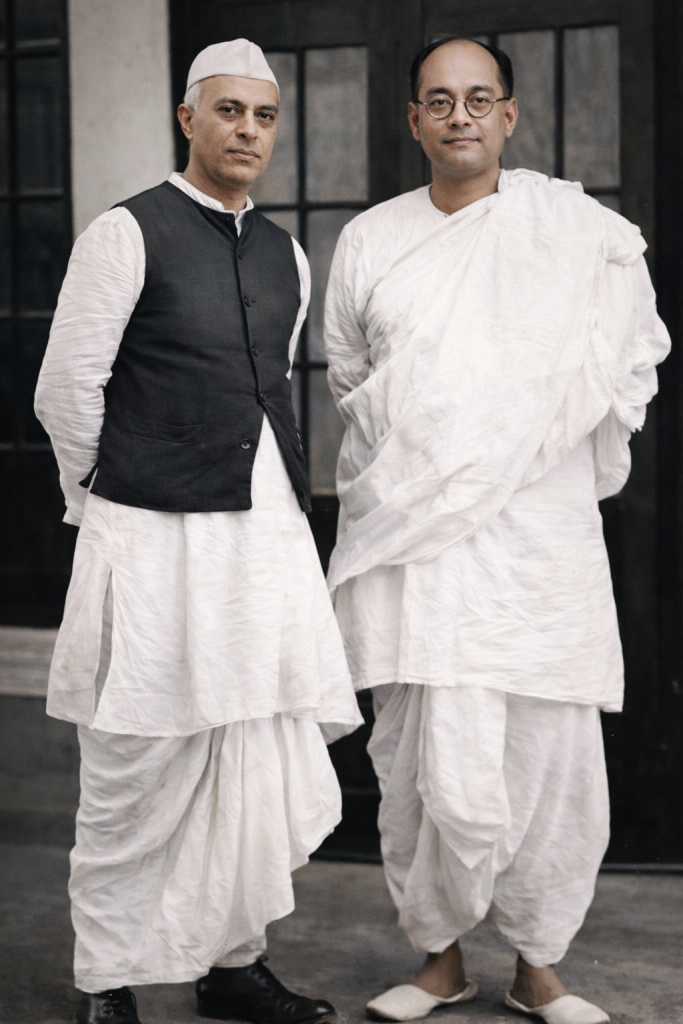
Their collaboration was especially visible in their advocacy for economic planning and international awareness. Bose and Nehru believed India’s struggle was connected to global anti-imperialist movements. They supported scientific advancement, state-led development, and social reforms aimed at reducing poverty and inequality. Their shared outlook distinguished them from more conservative elements within the Congress and positioned them as influential voices shaping the ideological direction of the national movement.
Leadership as President of the Indian National Congress
Haripura Session,
Subhas Chandra Bose was elected President of the Indian National Congress at the historic Haripura Session in 1938
National Planning
As President, Bose established the National Planning Committee under Jawaharlal Nehru’s chairmanship.
Tripuri Crisis
In 1939, Bose was re-elected at the Tripuri Session, defeating the candidate supported by Mahatma Gandhi.
Forward Bloc
Due to mounting opposition within Congress, Bose resigned from the presidency in 1939
Ideological Conflict with Gandhi’s Non-Violent Strategy
The relationship between Subhas Chandra Bose and Mahatma Gandhi was marked by deep mutual respect but sharp ideological divergence. Bose admired Gandhi’s ability to mobilize masses through non-cooperation and civil disobedience, yet he believed that non-violence as an absolute principle limited India’s strategic options. While Gandhi viewed non-violence as both a moral creed and political method, Bose treated it as a tactic that could be adapted according to circumstances. He argued that British imperialism relied on force and would not retreat merely through moral appeal. This fundamental difference shaped their political debates within the Congress and gradually widened the gap between their visions for achieving independence.
Bose’s outlook was influenced by global political developments and the growing tensions preceding the Second World War. He believed that international conflict created an opportunity for India to press for immediate and complete independence. In contrast, Gandhi emphasized patience, moral discipline, and gradual mass awakening. Bose advocated organized resistance, stronger central authority, and preparedness for direct confrontation if necessary. He felt that excessive compromise weakened the momentum of the freedom struggle. For Bose, national liberation required decisive action and readiness for sacrifice beyond peaceful protest, especially when colonial policies grew more repressive and dismissive of Indian aspirations.
The ideological clash became most visible during Bose’s re-election as Congress President in 1939. Although he won democratically, many senior leaders loyal to Gandhi withdrew support, creating a political deadlock. Unable to implement his programs effectively, Bose eventually resigned and later formed the Forward Bloc. Despite disagreement, Bose continued to acknowledge Gandhi as a national leader, even addressing him as “Father of the Nation” in later broadcasts. Their conflict reflected two contrasting yet influential approaches within the freedom movement — one rooted in moral non-violence and the other in assertive, strategic nationalism.
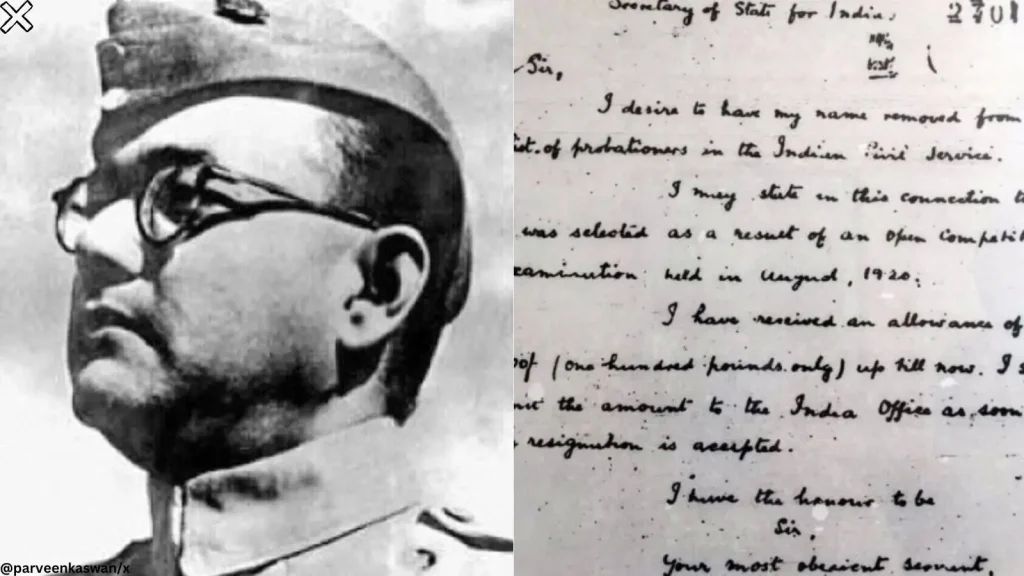
Resignation from Congress Presidency
In 1939, Subhas Chandra Bose resigned from the presidency of the Indian National Congress following intense ideological conflict within the party. Although he had been re-elected at the Tripuri Session, many senior leaders aligned with Mahatma Gandhi opposed his policies and refused to cooperate with his executive committee. This created a political deadlock that limited his ability to function effectively as President.