
Rise in National Movement
- Don't Miss
Role in the Indian National Congress
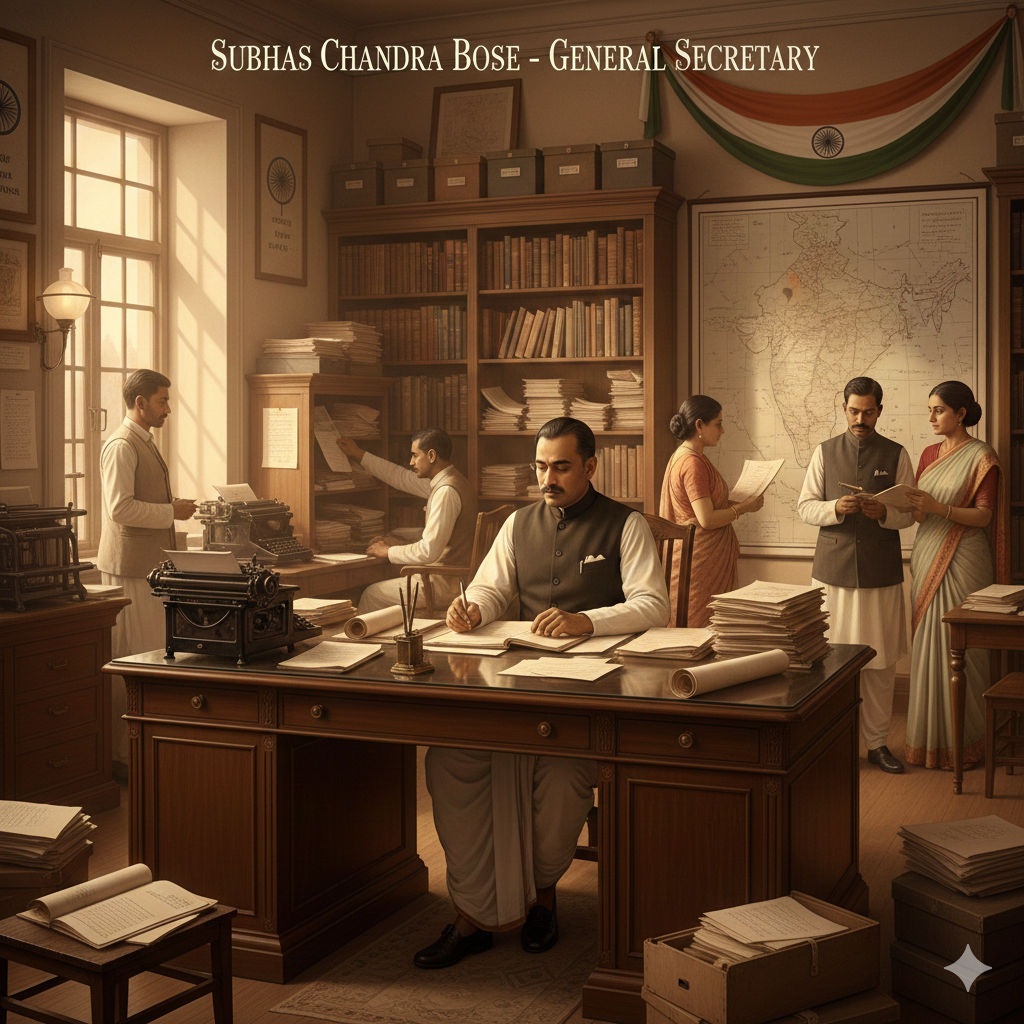
General Secretary
As General Secretary of the Indian National Congress, Subhas Chandra Bose introduced a new era of discipline, energy, and organizational strength within the party. He streamlined communication between provinces, encouraged structured planning, and brought forward a clear system that improved the efficiency of Congress activities. His administrative skills and dynamic leadership helped transform Congress into a more active and unified political force at a time when the freedom movement needed momentum.
Bose’s focus on youth participation added an important dimension to Congress functioning. He actively motivated students and young volunteers to join the national struggle, creating a strong base of committed workers across the country. His methods modernized the organization and helped Congress connect with a wider population, strengthening the movement at the grassroots level.

Working with Jawaharlal Nehru
Subhas Chandra Bose’s collaboration with Jawaharlal Nehru was a significant chapter in the national movement. Both leaders shared a belief in modern, progressive nationalism and envisioned a strong, self-reliant India. Their discussions, strategic planning sessions, and joint campaigns added intellectual depth and energy to Congress during a critical period. Despite differences in style, they respected each other’s commitment to India’s freedom.
Their partnership symbolized the blending of bold action and philosophical vision. Nehru’s modern worldview and Bose’s assertive leadership complemented each other, inspiring young Indians and strengthening Congress from within. Together, they played a crucial role in shaping the direction of the national movement and expanding its reach across the country.
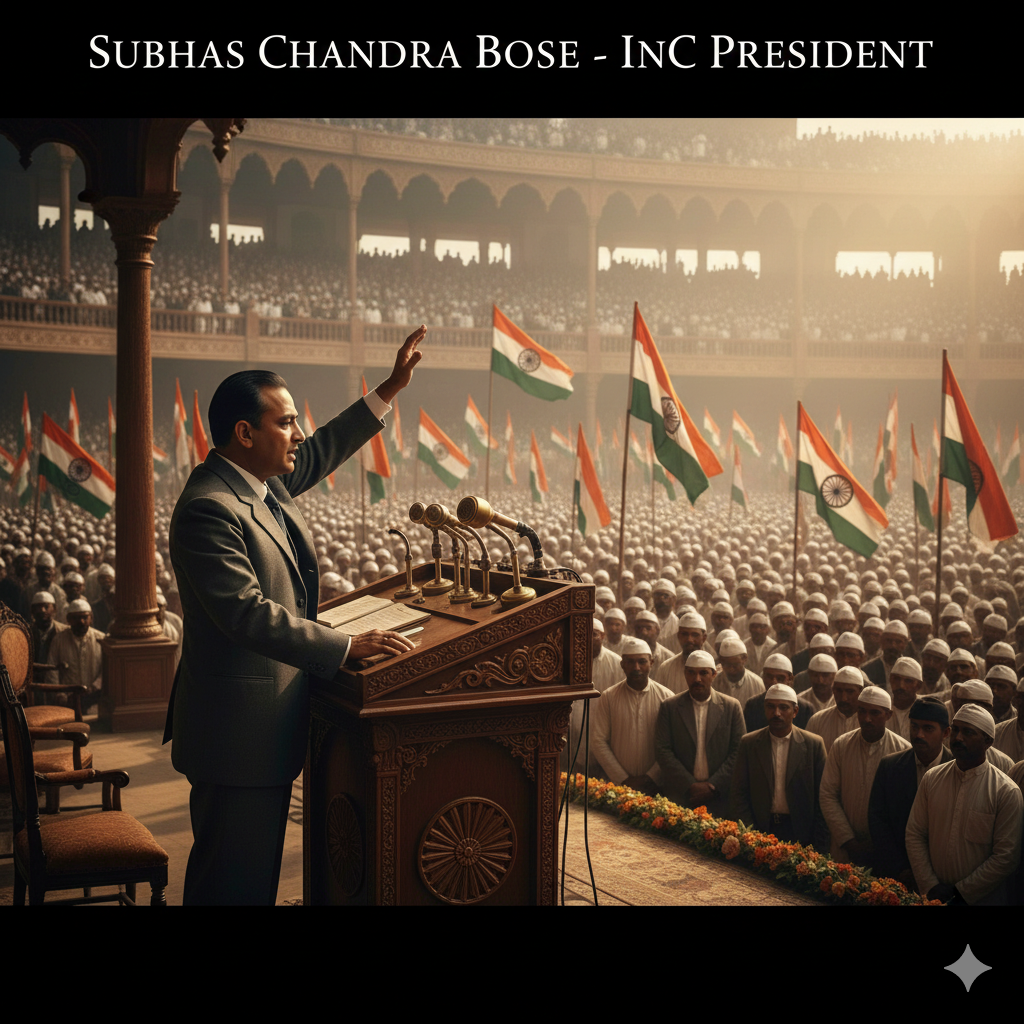
President of INC (1938 & 1939)
Subhas Chandra Bose’s election as President of the Indian National Congress in 1938 and again in 1939 marked the height of his influence and popularity. His leadership emphasized complete independence, strong national preparedness, and rapid industrial development. Bose believed India must build economic strength and military capability to face colonial power, and he pushed Congress to adopt a more assertive and decisive approach toward freedom.
His second-term victory, achieved despite opposition from senior leaders, reflected the tremendous public support he commanded. Though disagreements eventually led to his resignation, these two years showcased his bold vision, clarity of purpose, and unwavering dedication to the national cause. His leadership during this period remains one of the most dynamic and transformative moments in Congress history.
- Clash of Ideals
Conflict & Differences
Clash with Gandhi’s Non-Violent Strategy
Subhas Chandra Bose deeply respected Mahatma Gandhi but disagreed with the strict reliance on non-violence as the only path to freedom. Bose believed that the British Empire would not yield without stronger political and strategic pressure. His vision emphasized urgency, national preparedness, and the possibility of more assertive resistance when required.
These contrasting philosophies created a major ideological divide within Congress. While Gandhi advocated patient moral struggle, Bose felt India must accelerate its fight for independence through multiple methods. This clash reflected not personal conflict, but two very different approaches to achieving the same national goal.
Resignation from Congress Presidency
Despite winning the Congress Presidency in 1939 with overwhelming support, Bose faced increasing opposition from senior leaders who aligned more closely with Gandhi’s methods. The lack of cooperation made it difficult for him to implement his policies and strategic plans.
Rather than compromise his principles or lead without unity, Bose chose to resign from the presidency. His resignation was a powerful statement of integrity—showing his commitment to India’s freedom above positions of authority. It also marked a pivotal moment where he began charting his own independent course.
Forward Bloc Formation (1939)
After stepping down, Bose founded the Forward Bloc in 1939 to unite all progressive and left-leaning nationalists. The new organization aimed to create a stronger, more decisive movement within the larger freedom struggle. Bose envisioned mobilizing workers, peasants, youth, and patriotic groups under one energetic national platform.
The Forward Bloc became a symbol of Bose’s determination to pursue a more action-oriented strategy. It strengthened his nationwide support base and laid the foundation for his bold international efforts in the years that followed.Rather than compromise his principles or lead without unity, Bose chose to resign from the presidency. His resignation was a powerful statement of integrity—showing his commitment to India’s freedom above positions of authority. It also marked a pivotal moment where he began charting his own independent course.